


Automation, AI, and WMS: How Technology Transforms Modern Warehouse Services

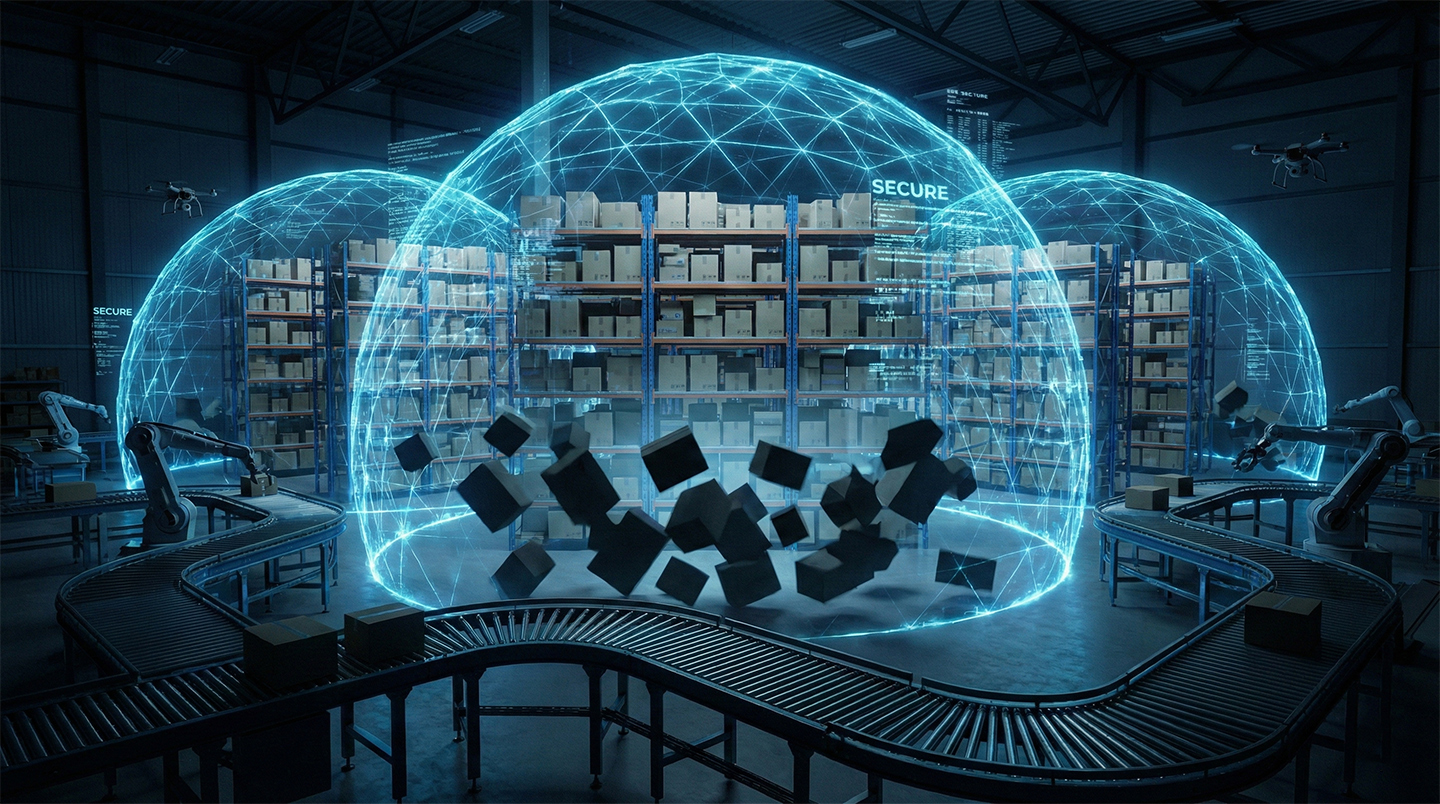
For modern business, a warehouse is no longer just an infrastructural expense. It is a direct factor in operational efficiency, delivery speed, and customer satisfaction. In conditions where the market demands rapid response and precise execution, a standard warehouse can no longer ensure competitiveness.
Today, companies face clear tasks:
Reducing order processing time
Minimizing errors to the lowest possible level
Optimal inventory turnover
Full control of operations
These tasks cannot be solved by space and human resources alone. Standardization of processes and technological management are required.
In the business environment, customer expectations have already turned into measurable indicators – KPIs. From the client’s perspective, the final experience is measured as follows: how quickly my order was processed, how accurately the products were gathered, and how timely I received them.
That is why modern warehouse service is a system that combines space, processes, people, and technology so that a business can grow without stress.
When talking about modern technologies, it is important to remember that these solutions were not created all at once. Today’s digital, automated warehouse service is the result of development that has taken shape over centuries – from simply storing stocks to complex, strategic operational processes.
Warehouse Automation
In a modern warehouse, automation is the answer to an operational reality where order volumes are increasing, fulfillment deadlines are shortening, and every single error is directly reflected in costs and customer satisfaction.
Warehouse automation is already a global trend, not just an individual choice for companies. Industrial analytics, including analysis by McKinsey & Company, show that the market is actively shifting to goods-to-person models and Autonomous Mobile Robots (AMR). These technologies reduce human involvement in the order picking process, increase throughput, and provide more stable results even under high-load conditions.
The use of robots in the order picking process gives us a standardized and predictable result. These systems work with predefined logic and in synchronization with warehouse management software, allowing orders to be picked quickly and with uniform accuracy.
Automated conveyor systems accelerate this process even further. They connect different zones of the warehouse into one continuous work chain and reduce the time spent on internal movement.
It is important to note that automation does not imply the replacement of human resources. Modern warehouses use a hybrid model where technology performs repetitive and precise operations, while humans manage the process, control quality, and make decisions in non-standard situations.
Ultimately, the effect of automation is clearly visible in two main indicators: order processing speed increases significantly, while the number of errors decreases sharply. It is at this stage that automation transforms from a technological novelty into an operational advantage, allowing a business to manage growth without losing quality.
WMS – Warehouse Management Systems
Warehouse automation yields a full effect only when process management is built on a unified digital system. This serves as the role of the WMS (Warehouse Management System), which has become the core of modern warehouse operations.
WMS ensures inventory control in real-time. The movement of each product, from receipt to issuance, is reflected in the system at the exact moment the action occurs. This eliminates “theoretical stocks” that exist on paper but cannot be found in reality, giving the business an accurate picture of existing resources.
With a modern industrial approach, a WMS is no longer just an internal control tool for the warehouse. As Oracle’s Supply Chain Management vision shows, warehouse management systems work fully only when integrated with the entire supply chain: transportation, sales, and ERP platforms. In such an ecosystem, data moves freely and creates a unified picture from order to final delivery.
Oracle also emphasizes that the main value of a WMS lies in data feedback and forecasting. Information received in real-time is used to plan future loads, stocks, and resources. As a result, the warehouse becomes an active participant in decision-making processes and supply chain optimization.
Data-driven management is the main difference that distinguishes a technological warehouse from a traditional one. A WMS collects information on order speed, inventory turnover, load peaks, and operational delays. Analyzing this data allows companies to make decisions based on real operational indicators rather than intuition, to plan stocks in advance, optimize space, and reduce unnecessary costs.
Artificial Intelligence and Analytics in Warehouse Services
In modern warehouse services, data is the basis for pre-planning and operational improvement. This is where Artificial Intelligence (AI) and analytics come in as the next logical stage in the development of WMS systems.
The effect of AI in warehouse operations is already measured by specific results. According to industrial analytics, the implementation of AI-based systems often leads to a 30–50% reduction in errors and an approximate 35% increase in productivity. These results are achieved through more accurate demand forecasting, inventory optimization, and automated improvement of work processes.
As indicated by various logistics and technological studies, Artificial Intelligence is particularly effective in conditions of high volume and variable loads. In such an environment, data-driven algorithms help businesses accelerate operations without losing quality and reduce operational risks.
One of the main functions of AI is demand forecasting. Systems analyze historical sales, seasonality, campaigns, and load peaks to create a forecast for future demand.
Along with demand forecasting, Artificial Intelligence plays an important role in inventory optimization. Analytical models determine which product should be available, in what quantity, and at what location, so that order fulfillment occurs quickly and with minimal internal movement.
AI also provides the opportunity for continuous improvement of work processes. Systems identify weak points, delays, overloaded zones, and inefficient routes, offering optimal solutions to reorganize processes. This means that the warehouse no longer just reacts to problems after they arise but prevents risks.
The Warehouse of the Future
Warehouses of the future are being built with an approach focused on efficiency, flexibility, and sustainability, where technology simplifies operations and assesses risks and resources in advance.
The use of drones in the inventory process is already becoming a real practice. Drones quickly and accurately check stocks on high shelves, reducing human involvement in physically difficult processes and significantly shortening inventory time.
Smart warehouses are based on IoT (Internet of Things) technologies and interconnected systems that control processes in real-time. Temperature, humidity, movement, and security are measured and regulated automatically, which is especially important for sensitive products.
In the warehouses of the future, technological development is in line with ecological and energy-efficient approaches. Smart lighting, optimal energy consumption, and automated climate control reduce costs and at the same time respond to modern sustainability requirements.
Ultimately, the warehouse of the future is an environment that “thinks” for itself, collects data, reacts to changes, and helps businesses work stably, effectively, and with a long-term perspective.
Automation of operations in warehouse services, WMS systems, Artificial Intelligence, and smart solutions create an environment where processes are predictable, data is reliable, and decisions are substantiated.
In these conditions, choosing a modern warehouse partner means strengthening your operational strategy. A partner based on technology helps a company better manage stocks, reduce costs, and create a stable and high-quality experience for the customer.
Dasta 3PL is exactly such a partner. The company’s approach is based on a flexible, streamlined, and transparent logistics model, where inventory control, order management, and delivery processes work in a unified system. As a result, businesses receive not only optimized costs and saved time but also real operational leverage for rapid and stable growth.
For detailed information, contact us: 032 290 01 12